Showing posts with label Advent. Show all posts

Saturday, 17 December 2011

The trees in winter

The trees in winter


I was travelling through the Derbyshire hills the other day, on my way to the Nightingale centre at Great Hucklow. I spent most of the journey simply staring out of the window and taking in the beautiful winter scene. The fields were white with snow and sheep. I also noticed the lonely winter trees, stretching out from cold pale ground.

There is something very beautiful about the trees in winter. These lifeless stick like sculptures stretching out from the ground are stripped right down to the bone. They look vulnerable and exposed, but they are not. By next spring life will have returned and I know this scene will be very different. If I travel this way then I will see the new lambs and the rolling fields, separated by dry stone walls and the trees will once again be bursting into life.

I am enjoying this winter, I have a new found sense of appreciation for it today. This is because I am able to empathise with it. I feel that I have been stripped of some unwanted and unneeded skin these last few weeks; I feel that some of those barriers that block me from life, from love, from God have been removed; I feel that I have been opened up once again. Now some may see this as making myself vulnerable, well I have no problem with that. Life is a vulnerable experience; you cannot be protected from it. Actually by trying to protect myself from life is to actually live in fear and I do not believe that this is living at all. I know that my attempts to protect myself in the past have only ever made me feel increasingly lonelier and cut off. I need to feel the cold this winter, to truly experience it. I need to feel bare and stripped at times because I know by doing so I am preparing myself for the new birth of the new year and the coming of spring; I need to prepare myself for the pink snow that I use to see falling from the cherry blossom in the courtyard at Luther King House. But first I must feel the cold and not fear it. It’s funny I don’t seem to mind the cold this winter, in fact I’m actually enjoying the fact that I can feel it. I know that I am alive and by golly do I want to be alive.

I have been talking an awful lot about the coming of light these past few weeks, this is of course in celebration and appreciation of Advent. I have also talked about darkness and the “ache of loneliness”. Well now I am beginning to question myself. Is the dark all bad? Should we fear it? I am not wholly convinced that we should, it has its place in the circle of life, just as much as the light. The winter Solstice will soon be upon us. This year it will fall on the 22nd December. This is the shortest day of the year, in terms of daylight hours of course. Every day last 24 hours, obviously. This shortest day marks the end of the descent into darkness and the beginning of the new light.

In Hinduism, which has recently celebrated its own festival of lights, the Deity most associated with darkness is Kali. On the surface she is seen as destructive, she drinks blood and wears a chain of skulls. Seen literally she would have to be viewed as monstrous and terrifying. This though is not what this icon is about, at all. There is something much deeper going on in the imagery. It is a mistake to get lost in the metaphor, this is true of all religious symbolism by the way. “Kali” in Sanskrit is the feminine word for time. In time we all die, it is a fate that cannot be avoided, no matter how clever we think we are. She is black, not because there are racial undertones here but because death is a mystery; we cannot know what will happen to us when we die. Kali represents the mystery of life and death and the continuing cyclical relationship between the two.

This is an image that seems particularly pertinent during the winter when everything has died off. The ground is hard and the trees are bare and generally speaking people’s moods seem a little lower. This though is not something that we should fear, in fact perhaps it should be celebrated. Everything that lives and grows, including we humans, needs to lie fallow for periods of time. We need this because we need to rest and regenerate. The leaves that fell from the trees in the autumn are now regenerating in the soil. By spring this will lead to new life. It is the death of these leaves that actually makes new life possible.

We need not fear the dark it is both regenerative and nurturing. Darkness symbolises the holy, just as much as the light. There can be no Easter without Good Friday. To ignore the darkness or to try and flee from is to ignore elements of the Divine revelation in life itself. There is nothing in life that is beyond the range and reach of God. These words from Psalm 139 always come to my mind when I think of darkness and light.

7 Where can I go from your spirit?
   Or where can I flee from your presence? 

8 If I ascend to heaven, you are there;

   if I make my bed in Sheol, you are there. 
9 If I take the wings of the morning
   and settle at the farthest limits of the sea, 
10 even there your hand shall lead me,
   and your right hand shall hold me fast. 
11 If I say, ‘Surely the darkness shall cover me,
   and the light around me become night’, 
12 even the darkness is not dark to you;
   the night is as bright as the day,
   for darkness is as light to you. 


Advent truly is the season of darkness and light. Both of these qualities offer vital religious insights and both are worthy of our reflection during this sacred season. In the symbol of Yin and Yang, we see clearly the relationship between the light and dark. Where the whiteness of Yin is most dominant we see the seeds of Yang emerging and where Yang is more dominant we see Yin emerging. You see the light and dark give way to one another, they complement each other. You cannot have one without the other. Neither is beyond the reach of the Divine either, for they are both a like to this universal love. I do not believe that God would reject anything or anyone. This is not the way of love.

This year I am learning to appreciate the cold bareness of winter. Yes I am celebrating the coming of new hope and light, but not by ignoring the dark. I need the dark, I need to be stripped bare at times, I need to lose this skin that sometimes I feel so imprisoned in. I need to let the new life within me spring into being and thus allow my soul's recycle to continue.

I now understand how important it is to really feel the cold at times.


Wednesday, 14 December 2011

Myth & Mystery: Glad Tidings of Reason and Fact

Myth & Mystery: Glad Tidings of Reason and Fact


From “Lifecraft” by Forrest Church from the chapter “A Mystery Story”

"Reckon the odds. That we should even exist staggers the imagination. Then take it back further, back to the ur-paramecium. All of us are connected genetically to the beginning of life and kinetically to the beginning of time. The universe was pregnant with us when it was born. I find this far more amazing and inspiring than most theological reflections. Simply being here - my having written, your reading - is a miracle. Consider my awe at the underwater world on the Great Barrier Reef, how impossible is was to be blasé in the presence of a giant clam. We should never be blasé when reflecting on the creation or our place in it. As it is written in thirtieth chapter of the book of proverbs,

Three things are too wonderful for me;
four I do not understand:
the way of an eagle in the sky,
the way of a snake on a rock,
the way of a ship on the high seas,
and the way of a man with a woman.


Physics, anatomy, biology, and psychology can begin to decode such mysteries. Yet knowledge has its limits. Quoting an academic study, novelist Saul Bellow observed “that an average weekday New York Times contains more information than any contemporary of Shakespeare would have acquired in a lifetime.” That includes Shakespeare himself. The Times is a fine paper. I read it every day. But for all its information, it only hints, and then only occasionally, at what Shakespeare knew so very well: that the beauty of the bird, the symbol of the snake, the courage of the pilot, and the wonder of human love will always be touched by mystery."

Oh I do love Forrest Church...he speaks to my condition...

I was round at a friend’s house the other night, we were just chatting away about a few things that we as adults see as being so important. My friend has a six year old son and during our rather serious conversation his son burst in with incredible excitement. A tooth had fallen out and obviously he wanted to show it to his dad. I am told that the going rate for a tooth these days is £5 and a set of football cards. It seems that the global recession has not yet impacted on the tooth fairies. A little later he burst in again this time desperate to show something he’d received on his laptop. It was a personalised video message from Santa Claus. Santa addressed him by name and was in possession of a great many details about his life, He had pictures too. Santa discussed how my friend’s son had been behaving for the last few months. At the end of the message Santa told him to be nicer to his brother.

It was an absolute delight to hear this little boy asking when his brother would be home, as he wanted to give him a hug. It was beautifully magical just getting lost in this family's little world, if only for a short time. I had gone to the house to help someone, spiritually I suppose, I had gone to teach. That said I left feeling I was the one who had learnt a lesson and I was one who had received the greatest gift; the gift of joy and wonder; the gift of seeing life through the eyes of a child. A priceless gift if ever I have received one. We can learn so much from children.

They do indeed bring “Glad tidings of comfort and joy, comfort and joy”

Sophia Lyon Fah’s is so right when she says that every night a child is born is a holy night. For in every child is that wonderful gift of potential. It is important to always remember that we did absolutely nothing to deserve the gift and privilege of being born; we truly had no say in it, it is a gift freely given. What we do with the Grace that is life itself though is another matter all together. This we do have some say in, but we did absolutely nothing to deserve it.

We are now well and truly into the Christmas season. The music is being played in the coffee shops and the other shops too no doubt. I am yet to venture into the other shops and can only vouch for what is being played in Cafe Nero in Altrincham. The adverts are everywhere. The season of Christmas re-runs has already begun. As has the bah humbugging. I heard a bit of it the other morning from a friend. A friend who always makes me chuckle when I sit with him. He makes me chuckle because he reminds me of the cynical guy that I was a few years ago, I was the emperor of scepticism. This was back in the day when my brother would call me Alan Rickman. This was because I reminded him of the character he played in Galaxy Quest, I used to be a real ranter back in the day. And yes Christmas really was a humbug. The awe and wonder at the mystery of life that I had once possessed had become covered by a cloak of cynicism and bah humbug.

Advent is about preparation. Now I used to be someone who was well prepared for misery, I sought it out in actual fact. You may well say I was utterly addicted to it. I certainly worshipped it. What I am becoming increasingly aware of is that I now have to make myself equally prepared for joy. This is my focus at the moment to open myself up as much as possible to the joy that is there in life. This will not take away the pain and disappointment that is there in all our lives. That will hit me just has hard as it always has. That said it will not have the same impact as it once did, because I am also working on preparing within myself a nest, a home, for the joy that is present in life, in love, in mystery. I am learning not to dwell on my troubles, because I keep remembering the lessons that the children I have known in my life have taught me. This advent for me is about preparing for joy and magic and mystery.

A friend recently sent me this play on the Christmas carol “God rest thee merry gentlemen”, it was written by the Unitarian Universalist minister Rev Chris Raible. He is playfully mocking himself and our tradition for its idolatry of reason. Reason and fact aren’t everything. There is more to humanity, and to life itself than we are ever capable of seeing and knowing. True humility always leads to a greater openness to new and wonder filled experience.

"Glad Tidings of Reason and Fact" by Rev Chris Raible

  God rest ye, Unitarians,            
  Let nothing you dismay!             
  Remember that there is no proof     
  There was a Christmas Day            
  For Christmas really started as     
  A pagan holiday.                    

  Oh, glad tidings of reason and fact, 
  Reason and fact. 
  Glad tidings of reason and fact. 

  No wise men travelled from the East, 
  The journey's far too long. 
  There were no shepherds in the fields, 
  The time of year's all wrong; 
  We don't believe in angels; 
  That rules out the angels' song!    

  (Chorus) 

  We're too sophisticated to 
  Believe in tales so old. 
  We know that human avarice means 
  Too much bought and sold; 
  We only celebrate because 
  This season is so cold. 
   
  (Chorus)
            
Now I will not argue with the factual accuracy of the words, but is this really what the Christmas story is about?  Is it really about what actually happened or didn’t happen all those years ago? Does this really bring glad tidings of anything? Does it help us to live better lives, to offer love and compassion to one another?
Advent is about preparing us for the coming of hope that can be found in a humble birth of a lowly child in a lowly stable. A child with incredible potential and yet who is rejected. Isn’t this a universal tale? Doesn’t it speak of all of us at times? There is more to the Christmas myth than the historical accuracy or inaccuracy of the Biblical accounts. In fact to get lost in detail of what did or didn’t actually happen is to miss the whole point of the story. It sounds as ludicrous as those medieval theologians who argued over how many angels could dance on the head of a pin. Is that what really matters? Surely there is more to the story than reason and fact. Gosh I’m starting to sound a bit like Alan Rickman again.
Joseph Campbell taught that myths such as the nativity story are actually metaphors for human life. That they are eternal and universal tales that can teach us about our lives right here right now. He believed that by understanding these mysteries we can begin to understand who we truly are and what life is all about.
Carl Jung taught that these myths originate within our “collective unconscious”. He said that we each have a conscious level that we are aware of in our waking moments (this is what is operating now as you read this blog, or at least I hope it is, are you still awake?). Beneath this is our personal unconscious level, our closet. This is where we store memories, experiences, desires, fears, urges, compulsions etc. It is here that our personal “stuff” is stored, which from time to time we dip into. Some of this stuff is beautiful and some of it is terrifying. This is the domain of our devils and demons.
Jung described our “collective unconscious” as our “collective closet”. He uncovered common themes, symbols and motifs while working with his patients and he noticed that these same themes, symbols and motifs were also to be found in the religious stories and myths. From this he concluded that these common myths and stories are part of humanity's “common closet”. These myths are drawn from a common human well of memory and thought and that they teach us about ourselves and the mysteries of existence. The problem today is that when we hear the word myth we equate it with an untruth, a lie, instead of seeing them as revealers of deeper universal truths. As Campbell observed, to view them as lies is to actually get “stuck in the metaphor” and to fail to see the deeper universal truth that is being revealed.
Why these are imprinted into our human consciousness I cannot answer. Richard Dawkins talks of the evolution of the meme (pronounced like cream) that these ideas, tunes, catchphrases and stories are just past on down the line to help us cope with life. He sees the myths as untruths as lies, as I once did and my friend in the coffee shop still does. Today though I see more; there is something in the corner of my life that I cannot quite see and yet I can experience, so long as I don't get stuck in the metaphor.

Yes the reductionist can dissect life and understand the minutiae but by doing so they can still miss out on its beauty and true meaning. You see the truth is the more we know, the more we realise how little we can ever know and so the mystery grows. I suppose it is here where the magic is and where the God of my misunderstanding is discovered, in the unknown and unknowing. This power is both redemptive and it is divine. It brings out our heart and it brings out our soul. By opening myself up to the unknown I have discovered the hope and joy that I had once lost and I have found the peace that passeth all understanding.
So yes this advent I am preparing myself for the coming of hope, love, peace and joy. I invite you to come and join in too.

Come Christmas come...most needed of seasons.


Monday, 28 November 2011

The Ache of Loneliness


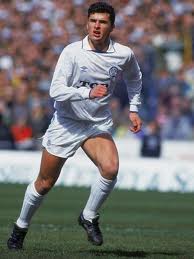
I was listening to the radio this afternoon, relaxing and preparing myself for leading worship this evening when I heard the tragic news of the death of Gary Speed, the forty two year old manager of the Welsh football team. Gary was a onetime hero of my mine as he was part of the championship winning Leeds United midfield of 1992. It emerged a little later that Gary had taken his own life. This was perhaps even more shocking. Why had this healthy talented and seemingly well balanced man taken his own life? No doubt more will be revealed in the coming weeks, but I suspect no satisfactory explanation will ever be unearthed. Suicide, depression and the aching loneliness that so many of us suffer from has never been adequately understood and it has never been resolved. In fact it would appear that has humanity has progressed materially it has regressed emotionally and spiritually. Loneliness, mental illness and suicide appear to be on the increase. I have been there myself and I have witnessed friends and loved ones going through this living hell too. Haven’t we all. I suspect that there is not a family in the land that has not experienced the shadow of suicide.

Today is Advent Sunday, which marks the beginning of the Christmas season; a time of joy and celebration, a time for family and fun. For most folk Christmas is the happiest time of the year. That said for others it can be the hardest. It can bring all those feelings and emotions that they have been trying to deal with to the surface. For some people Christmas can bring them face to face with their own loneliness. For some people Christmas can be hell.

For many years I struggled with Christmas as I struggled with my own humanity. For me Christmas brought me face to face with the extent of my own loneliness and isolation. This is no longer the case I’ve danced with most of my demons, but I do remember how it felt and I know that so many people still suffer with these feelings. I know this because they tell me. Yes people tell me of their joys and triumphs but they also tell me of their pain and suffering. One of the hardest aspects of ministry is being with people in utter despair. It does keep you humble though, as it shows you the limits of your power. Sometimes all that is left is tears and prayer.

Loneliness is a horrible, horrible thing. It separates us from others; it makes us believe we are the only ones. It saps our vitality. It makes us feel scared, insecure and vulnerable. The isolation and disconnectedness that it fosters leaves us feeling unloved and worse still unlovable, Loneliness is an assault on our humanity and our worth and dignity. It makes us ask the question, do I really belong here? It brings us face to face with the void, with those questions and fears we do not want to entertain; the fear that we are alone and of course the fear of death. It brings to the surface the suspicion that there really is no rhyme or reason to life, no purpose, no meaning.

Loneliness can be terrifying. We do all we can to avoid it. We spend an awful lot of time convincing ourselves that we are not alone. How many times a day do we check our e-mails, our facebook updates, or mobile phones, or convince ourselves that someone has knocked at the door? How often do we think we have heard someone call out our name in the street?

Loneliness appears to manifest itself in three basic forms. I have heard them described as intimate loneliness, social loneliness and loneliness of the spirit, an existential or cosmic loneliness.

The primary cause of intimate loneliness is the loss of a loved one. Such as a partner, lover, parent, friend, sibling or god forbid a child. It is not the only cause though. Many people long for an intimate connection that goes way beyond the closeness of everyday friendships.

Social loneliness occurs when we feel cut off from others, when we feel isolated from the social networks that we need. It stems from a lack of companionship and or community. Modern living is a major source of social loneliness. Modern life provides decreasing opportunity to visit friends and loved ones. We increasingly communicate through technology and less so face to face. We expand far less energy on human social interaction. Our culture sees more people working longer hours. Productivity is increasingly prized, while connecting and interacting with friends is seen as a luxury and not a necessity. When I look at how we live today I am forced to ask the question, is this really progress?

The loneliness of the spirit, this emptiness of the soul this existential or cosmic loneliness is more difficult to understand and or explain. Some describe this as a ‘God sized hole’ or hole in the soul. This makes sense to me. How else can this feeling of being lonely or longing for something, without knowing what it is be explained? How else can we make sense of the feeling of missing someone, we’ve never met, that feeling of loneliness in a crowd, that need for something more? This feeling of being cut off from life and the rest of humanity. This feeling that you don’t quite belong. I have struggled with all of these emotions at times in my life and am occasionally visited by these ghosts today. When they come they are as terrifying as they always were. Thank God they no longer linger.

This hunger, this longing, this deep rooted loneliness that dwells in so many of us cannot be filled by relationships or friends. It seems to be woven into our humanity; it is part of our human nature. But why Oh why do we carry this longing in our souls? Perhaps it is there to stir us to reach beyond the confines of ourselves for that something in the corner of our lives that we cannot quite see; that something that speaks in a voice less than a whisper and yet somehow more than silence. Perhaps it is there to compel us to delve deeper to the core of our very being. Who knows?

Social loneliness is not difficult to explain. We all need social contact and community to survive and flourish. No man is an island. We often only truly know ourselves through our relationships with others. The reasons for intimate loneliness seem very clear. In creating close bonds with people, we create families and communities. This gives our life meaning. It is this common humanity that binds people together. When it goes, or is absent, we mourn its loss. We crave for it once again. But what about the deeper longing of the spirit? Maybe this is a manifestation of our longing for wholeness. Maybe it’s a need to return home and perhaps it can only be filled by a relationship with the larger presence of life. But how can this be achieved?

Well perhaps the first thing we need to do is face the void and not try to flee from it and or fill it with other things. Perhaps one answer is to embrace solitude. Solitude and loneliness are not the same. One can experience solitude without being lonely and yet we can be miserably lonely and yet be surrounded by people. Solitude is a physical state; where as loneliness is an emotional, psychological and spiritual state. The difference between loneliness and solitude can be monumental and yet subtle. They may look alike, but aren’t experienced alike. It’s like seeing a body as naked, rather than a person being a nude. Naked is stripped and vulnerable, naked is lacking clothes; where as a nude is a beautiful bare body, it is art. Loneliness describes all that is lost, when we are alone; solitude describes all that is gained in all is beauty.

Loneliness can be caused by past hurts that can lead us to try to protect ourselves from life. We have all experienced the pain of betrayal and loss. No one likes being hurt, so we become wary. Because of these hurts we build walls, until finally intimacy loses its attraction. Loneliness is the price of feeling safe from emotional hurt. Of course it fails to even do that. We cannot escape the pain that accompanies the joy of life. All we achieve by trying to protect ourselves from pain is to create the suffering within the suffering. This is a worst kind of pain. I know this pain only too well as I experienced it for much of my life. This is a living hell. I thank God each day that it rarely visits me these days and when it does it no longer lingers.

This Advent, this season of hope and joy I will be thinking of those people in my life who suffer each day with that empty aching loneliness, whatever the cause may be. I will think especially of those suffering from the loss of those most dear to their hearts. I will do so though with the full knowledge that I alone cannot take away their pain. I can though be with them, I can walk side by side with them and even occasionally hold them in their pain.

Hold close to you the one’s that you love...because none of us ever really knows what they’ve got until it’s gone.

The Light of Hope: Which Wolf Wins?

The Light of Hope: Which Wolf Wins?

I can only imagine what it must be like to experience utter darkness. I was only a baby during the power cuts of the early 1970’s and therefore have no memory of them. And like most folk of my generation I have seen the images and been told the stories of the war time blackouts, but still I cannot really imagine what it must have been like walking those dark streets. The lights did go out in my home for a short time last year and I have to say I found it very difficult negotiating my way around the house, without anything to guide my way.


It’s pretty scary trying to find your way in the dark. No one likes to feel helpless, hopeless sightless. When we stumble around “in a land of darkness” we cannot protect ourselves and just end up stumbling around our own homes stubbing our toes or falling over furniture. That said it is not only material darkness that can cause us problems, we can also get lost in those metaphorical dark forests of life. This can be terrifying. The book of life is full of stories describing children getting lost in the woods. Those fairy tales explore universal themes that everyone can relate to. After all don't we all feel lost and or confused at times.


When we fall into one of life’s black holes we can lose all hope. In this pit we can begin to compromise the very values that we are trying to live by. In this darkness we can lose our dreams and our goals we can forget the path we are on and why we have chosen it. We can also lose sight of our security and supportive community as we search in the dark unaware of the many pitfalls. Sometimes we drive people away with our fear or perhaps they just walk away because they cannot stand our pain.


Perhaps there is another way, a way out. Even in the deepest darkness light can be found; the light of hope, which can show us a new way. This light cannot be resisted it is constantly revealing itself as life continues its re-birth. Isn't this what the season of Advent is all about, the preparation for the coming of the light.


Children bring that light into so many people’s lives. And of course it is the image of a child on which Advent and Christmas rest. The coming of Immanuel the child sent to rescue the people of Israel from their darkness.

I don’t accept this stories uniqueness; I do not believe that this is once in humanity’s life span thing.  Sophia Lyon Fahs is so right when she says “Every Night a Child is Born is a Holy Night.” The potential of every child brings hope; no one can remain completely lost if they can just glimpse this hope. There is that of God in each and every one of us. We all have the potential for great things, if we just nurture that loving compassion within us; we just need a little bit of hope and a sprinkling of faith to show us the way; we just need appropriate nurture. We know this from our own lives and we know it from the lives of those that have walked in the light before us. Even in our darkest hours there is a hidden strength that can be found, often from an unexpected source. All that we have to do is to let that light shine in and through us. Advent is a time of anticipation and as long as we hope, someone will light a candle against the prevailing darkness "and neither the winds of hate nor the gales of evil will extinguish it.” This light is universal and it is eternal.
The light of Universalism continues to speak powerfully to me. The concept of one light and many windows that my great hero Forrest Church spoke so beautifully about, keeps me humble and therefore open. I accept that I will never know the absolute truth about everything or even anything and that this enables me to experience life in a way I could never have imagined. The one light of God or truth is reflected through a variety of windows, which none of us can see directly or perfectly.


Universalism’s message of hope, of the everlasting love of God, also speaks to me. It brings Psalm 139 powerfully to the fore of my thinking, nothing and no one is beyond the reach of this eternal love. The dark and the light are both the same to this eternal love. We cannot escape it completely; we cannot flee from the range and reach of this eternal and universal love.


It is so easy to look at our world and just despair and give in and say we are doomed and lost in our own darkness. It is so easy to see life this way. Is this true though are we lost in despair? Is there no hope?

Tom Owen-Towle’s “The Gospel of Universalism: Hope, Courage and the Love of God” has helped me to understand that hope and despair share the same root, that they are joined together like Siamese twins. In the French language they share the same linguistic root; hope (espair) and despair (desespair).


To live in hope, to live in faith that we all have that light etched into our DNA, is not to deny life’s difficulties and pain. Instead it is to see the realities of who and what we are and what our true potential can be, if we just nurture it correctly. All we have to do is let that light shine that is there within us all. This sounds simple, but it is far from easy. It requires consistent effort to allow that natural compassion to grow, develop and nurture. We have to do it though because otherwise the other parts of ourselves take over and we turn with indifference from life. The opposite of hope is not despair, it is indifference.

I have written many times about the work of Karen Armstrong, the Charter for Compassion and her book “12 Steps to a Compassionate Life”. Her central theme is this concept of nurturing our compassionate natures; that this nurture of compassion is a universal theme central to all the great religious traditions throughout human history. This is a message of hope and it is an eternal and universal theme.


Hope springs eternal all we have to do is to begin to let our little lights shine. Isn't this what Advent is all about, the illumination of hope.

I will end this little chip of a blog with a story I have shared here before. I do love the tale and I believe it is worth repeating.


One winter’s evening whilst gathered round a blazing camp fire, an old Sioux Indian chief told his grandson about the inner struggle that goes on inside people.
“You see” said the old man, “this inner struggle is like two wolves fighting each other. One is evil, full of anger, envy, jealousy, sorrow, regret, greed, arrogance, self-pity, guilt, resentment, inferiority, lies, deceit, false pride, superiority, and ego”.

“The other one,” he continued, poking the fire with a stick so that the fire crackled, sending the flames clawing at the night sky, “is good, full of joy, peace, love, hope, serenity, humility, kindness, benevolence, empathy, generosity, truth, compassion and faith”.

For a few minutes his grandson pondered his grandfather’s words and then asked, “So which wolf wins, grandfather?”

“Well”, said the wise old chief, his lined face breaking into a wry smile, “The one you feed!”


Tuesday, 22 November 2011

Who is your Immanuel? Who is your “God is with us"?

Who is your Immanuel? Who is your “God is with us"?

Immanuel means "God is with us"
.
Who is your Immanuel? Who is your “God is with us”, the one you were promised, the one you have been waiting for?

For the ancient prophet Isaiah, he was a boy soon to be born who would guide the people of Judah back to peace and harmony with God. He would bring hope for victory and greatness in the tribe. He would be a gift from God to his chosen people.

Who is your Immanuel, your “God is with us”?

For Christians, he is Jesus of Nazareth. The baby in the Christmas story who grew to be a remarkable teacher among the Jewish people; whose ideas about love, forgiveness, and justice changed the world forever.

Who is your Immanuel, your “God is with us”?

Perhaps your Immanuel is a political leader, standing for the rights of the oppressed—a Martin Luther King or a Gandhi. Perhaps in their work with people you feel God is with us.

Who is your Immanuel, your “God is with us”?

Perhaps your Immanuel is an artist, bringing transcendence to the human spirit and lifting our hopes and dreams into the light—a J.S. Bach, a Picasso, a William Shakespeare. Perhaps in the presence of great beauty and creativity you feel God is with us.

Who is your Immanuel, your “God is with us”?

Perhaps it is a child. Created from our bodies, the child who is filled with the potential to do every great thing. Your promise from God that the world has hope for justice and beauty. For in the presence of a child we too can feel that God is with us all.

Who is your Immanuel, your “God is with us”?
Slightly adapted from words by Sarah Movius Schurr 


We are about to enter the season of Advent, beginning this Sunday 27th November. It got me thinking about the following words spoken in the 19th century by James Martineau


The incarnation is true not of Christ exclusively but of Man universally and God everlastingly. He bends into the human to dwell there and humanity is the susceptible organ of the divine.

This distinctly Unitarian view of the Incarnation speaks powerfully to me. Unitarians have tended to see Jesus as a man worthy of following, rather than as the unique manifestation of the Divine. Cliff Reed hits the mark perfectly when he states.

While Jesus was, like all people, a unique individual, he was not other than human. He was our brother in every sense, sharing the same human lineage as us. And thus when we speak of him as a child of god, as incarnate divinity, as vessel of god's promise to humankind, we speak of him as embodiment, as symbol of what is true of every human baby.

The ministry of Jesus, and those who have walked the same path, was indeed an enfleshment of creative power, supremely that of love, which can re-make human beings by revealing to them their roots in a divine creation, their reclaimable goodness and wholeness, their oneness with the glorious universe.
Cliff Reed

The classic Unitarian position has always been that Jesus was and still is a man worthy of following but not of worshipping as the one and only incarnation of the Divine.

The theologian John Hick argues that Jesus did not know that he was himself God incarnate; that the idea of the incarnation ought to be seen as a powerful metaphorical image; that Jesus ought to only be viewed as the embodiment of God because God's love was manifested through his life. He was not literally God's son though in the sense that he was not the creation of a miraculous birth fathered by God in the Holy Spirit. He highlights that the phrase "son of God" was a common Hebrew metaphor and was given to those who exhibited Godly attributes on earth. Therefore it is not surprising that someone who was considered as righteous as Jesus would have been given this title, although it was not meant in a literal sense.

According to Hick, metaphorically speaking, Jesus incarnated God in three ways. The first being that he was living out God's will, therefore God was living through him in this world; the second being that by living out God's will he was displaying the perfect example of how a human being ought to live and was therefore incarnating God; thirdly in the way that his life was perfect agape, it was purely self giving love. In other words Jesus' finite life reflected perfectly God's infinite love, but he was not literally God in the flesh.


Experience has revealed to me that all life can be an extension of this Divine Love. More and more I see the incarnation manifested in all existence.


Process theology and the concept of the ‘lure’ of divine love has suggested this idea for quite some time. Jesus is the word made flesh in that within his life the divine action manifested itself completely. Christ is the expression of the word, within him is the genuine union of divine activity and human activity. He did not literally come down from heaven, this is pure metaphor. To quote  Norman Pittenger Jesus, “...was never a god; he was always regarded as the manifestation in act of the one and only God.” This would suggest that what occurred in Jesus could occur in all human life.

The former Dominican priest Matthew Fox appears to develop this idea further in what he describes as the "Cosmic Christ". He claims that through the Cosmic Christ is the “I am” in every creature, therefore that all life can become the incarnation. He believes that the purpose of the incarnation in Jesus is to reveal the immanence of the Cosmic Christ and that as we grow into who we really are and as our compassion is developed the divine “I am” takes flesh once more. As Fox states “We grow into compassion and in doing so the divine “I am” takes on flesh once again. Since god alone is the compassionate One, as we grow into compassion we also grow into our own divinity.”

So we humans and all life are potentially expressions of the divine and if we express that divine quality within ourselves we can then hopefully inspire others to do likewise


In recent years I believe that I have witnessed and dare I say experienced what I call Divine love. I experienced it the first day I walked into Cross Street Chapel Manchester and was greeted by Peter Sampson. I know it sounds like nothing, but it felt very special. I experienced as I connected to that short lunchtime service led by John Midgley. This feeling, dare I say experience, developed over the next few months as I became part of the community there. This grew as I listened and worship and shared and most of all sung. I fell in love with singing once again there. Every time I sing I experience life in a way I don't during anything else that I do. I always liked to sing, but I experience it differently today.

I first knew this magical mystical feeling when I experienced pure human love manifested in a unique life. I experienced it through knowing Claire and Ethan. Ethan, especially Ethan, showed me that loves is real and exists in every human heart. By just being a part of his short life I began to see that I had once been like him. I saw in him what exists in every human child and all life. I began to experience what Matthew Fox has described as the Cosmic Christ. “That that connects all life.”

Reverend David Doel captures what I mean perfectly when he states that, “The Christ Child stands for the Hope of the World and represents the great miracle of human birth. In every child God comes down to earth. In every child the 'promise' of God is repeated. Every mother is Mary the mother of God and every child is nurtured by the Holy Spirit - that mysterious, creative and healing essence we call Life. The Christ Child is the symbol of our human potentiality; like the oak in the acorn."

The tragedy of my life was that I lost sight of this. Somehow, over the years, I became disconnected from life and became addicted to alcohol and fear and virtually lost my humanity. What I was able to finally, see, accept and connect to in my own life was "That Great reality deep down within every man woman and child." That the book Alcoholics Anonymous describes.

I again experienced that incredible manifestation of divine love on the day, the weeks and months that followed November the 2nd 2006, All Souls Day, the day that Ethan was killed. I will never forget the way that people came together within the community to hold the family and I will always remember how the people in my own community held and supported me. Not that what all these wonderful people did for me would have been enough if that Great reality, that I had rediscovered, had not already begun to flower. The old me would not, could not have survived that tragedy.

I am a great believer in miracles I see them all the time in my everyday interactions with everyday people. I have learnt to appreciate and value every interaction and every moment of existence. Every breath is a Divine gift, if I am only able to see it that way. Every single human being has the capacity for great things, if they would only get in touch with that great reality deep down within themselves. That said we are all also capable of great destruction and evil, every single one of us. It is as important that we remember that too.

None of this is cast in stone though; I simply cannot believe that. I am NOT convinced that anything is pre-destined and pre-determined. I believe that life and existence is truly open and that all human beings are responsible for their own lives and this spinning planet that we all share. The very characteristic of the universe is one of process and change and the agent of this has to be free will. The Divine mystery does not control everything instead what it offers us is the persuasive lure of love, if we could only see that.

All we need to do is to tap into that great reality deep down within us as so many wonderful human examples have done over the years. If we can't see this within ourselves then hopefully we can see it within other human lives or nature itself and be inspired by the beauty of creation, always remembering that we are all made of the same stuff.

If life has taught me anything it is that in order to live to our full potential we humans need to be connected to that that is buried deep within us and that that is circling all around us. To live successfully and happily in this world all we have to do is to first of all find and then maintain that connection and to simply live our lives.

We don’t need to build boundaries to survive, I say pull them all down. We don’t need to work and develop our self esteem, because we already have it in bucket loads. We just have to live honestly and truthfully and that natural self esteem that we are made of will just shine out of us. Hopefully by doing so we will shine some light onto the lives of others and they will be inspired to do likewise. If we do human life is bound to improve for all.